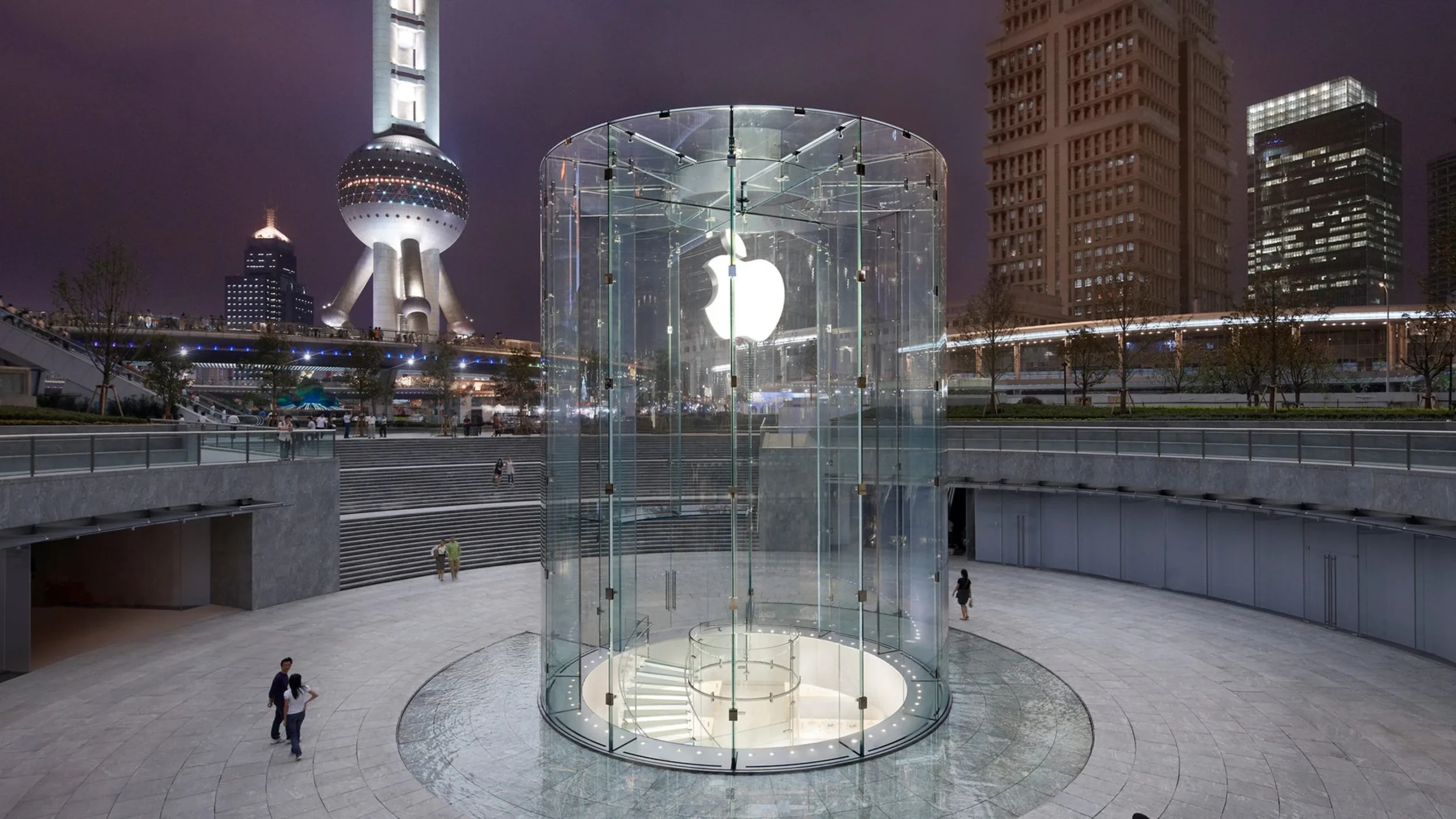
What is changing is the "rules" of normal international business due to the rising tension between the U.S. and China regarding tariffs and technology control. This affects all firms but especially those who have a global supply chain such as Apple.
Prior to the current U.S.–China relations, Apple had a simple strategy to maximize efficiency. They would create their products in the country that was the least expensive and fastest. Then they would distribute them into countries where there is the greatest demand. However, the new reality includes political and regulatory risk to both strategies.
This article will break down how the US-China relationship impacts Apple's business through four sections:
1.) The nature of the relationship between Apple and the U.S.-China relations.
2.) Examples of how trade and technology friction affect Apple in its day-to-day operations.
3.) Risks and positive changes for Apple due to increased friction in the global market.
4.) Potential ways Apple can respond to a more fractured global economy.
Why does China matter to Apple?
Apple's business model is based on creating a globally-distributed value chain. Decisions at the top of the chain occur at Apple's headquarters. At the bottom of the chain occurs mass production and assembly in countries where specialized capacity exists. In the past twenty years, China became an essential part of Apple's value chain due to several factors:
Speed and manufacturing capability: A network of contract manufactures and component suppliers located in China allowed for quick scaling of production.
Logistic capabilities: Densely populated networks of suppliers and infrastructure made assembly of complex goods possible at extremely high volumes.
Demand: China is not just a factory for Apple; it is also one of the largest consumer markets for Apple.
These elements combined created a unique value for China and created a unique vulnerability for Apple when the global geopolitical environment turned against it.
Trade War: Tariffs and Retaliations
The relationship between the US and China began to rapidly decline beginning in late 2018. The trade war, or the tariff war, began in earnest during the same period. Tariffs were exchanged by both sides as retaliation. The larger development, however, is the fact that the conflict is no longer "just" about trade deficits. Increasingly, the conflict is about technological superiority, data, and national security.
As an example, Apple is facing multiple pressures from the conflict. These include:
1) Restrictions on export and advanced technology:
The US has implemented restrictions on exporting advanced technology. The restrictions apply to the export of advanced semiconductor manufacturing equipment and manufacturing equipment. Apple is not directly targeted by these restrictions. However, the broader ecosystem is impacted by the availability of chips, manufacturing ability, and the time frame in which China can gain access to or develop leading edge technologies. All of these areas impact Apple's operational reliability.
2) Regulatory pressures and security scrutiny in China
China has introduced regulations that cover cybersecurity, data handling, and the use of technology in sensitive applications. Foreign technology brands may experience greater oversight and stricter compliance regulations. Apple may be subject to unpredictable shifts in policies, and the definition of "acceptable" may vary from day to day.
To address the rising geopolitical tensions — specifically the risk of escalating U.S.-China relations — Apple should consider a three-pronged approach:
A. Reshore and Diversify Manufacturing Footprint
By increasing the number of countries in which Apple manufactures products, the company will enhance its ability to recover from future supply chain disruptions, and thus better ensure continuous delivery of its products to customers.
B. Bolster Supply Chain Redundancy
Additionally, by enhancing supplier redundancy — i.e., having a second supplier for key components — Apple will have greater confidence in its ability to maintain continuous production regardless of future supply chain disruptions.
C. Invest in Resiliency Through Compliance Architecture
Finally, by continuing to invest in its compliance architecture, Apple will be able to rapidly respond to changes in regulations related to data governance, cyber security, and trade rules.
In summary, the above three strategies will provide Apple with a significant degree of resiliency against the potential impacts of escalating tensions between the U.S. and China. By proactively addressing these risks, Apple can continue to deliver on its promise of innovation and quality while minimizing its exposure to future supply chain disruptions.
This approach also reflects the growing trend toward increased regionalization and technological decoupling. As other nations begin to develop their own domestic technology industries, Apple's focus on establishing a truly global footprint will enable it to be prepared for an increasingly fragmented global technology landscape.
It is worth noting, however, that the specific opportunities available to Apple will depend upon the extent to which the U.S. and China choose to escalate their respective policies toward one another. Therefore, it is essential for Apple to continue to monitor developments in both countries and be prepared to adjust its strategy accordingly. Ultimately, Apple must recognize that its success will be dependent on its ability to successfully navigate the increasingly complex and uncertain global environment.
Apple's success in navigating this challenging environment will require it to make investments in multiple areas. However, by doing so, Apple will be able to continue to grow its business while simultaneously reducing its dependence on a single country. This will ultimately position Apple for continued long-term growth and success.
Overall, it is clear that Apple must take proactive steps to address the risks associated with escalating U.S.-China tensions. By investing in its compliance architecture, deepening its multi-country manufacturing footprint, and bolstering its supply chain redundancy, Apple will be well-positioned to mitigate the risks of these tensions.
It is also important for Apple to understand that the increasing tensions between the U.S. and China reflect broader trends in the global economy. Specifically, there is a growing movement toward technological decoupling — i.e., the development of independent domestic technology industries within individual countries.
While this trend poses certain challenges for companies like Apple, it also presents them with opportunities to differentiate themselves and establish themselves as leaders in the global marketplace. Companies that are able to effectively navigate this new reality will be well-positioned to thrive in an increasingly fragmented global economy.
Ultimately, Apple's success will depend on its ability to successfully manage the risks associated with the escalating U.S.-China tensions and to capitalize on the opportunities presented by technological decoupling. By taking proactive steps to prepare itself for this changing environment, Apple will be well-positioned to continue to innovate, compete, and thrive in the years to come.
Therefore, Apple must treat resilience as a core capability, and not simply as a necessary adjustment to be made due to current circumstances. Apple must design and build its resiliency as part of its regular business practices and must be intentional in developing and implementing strategies that will support the company's resilience.
Article written by Zhangir Zhangaskin | Proofread by Chintan Chokani
