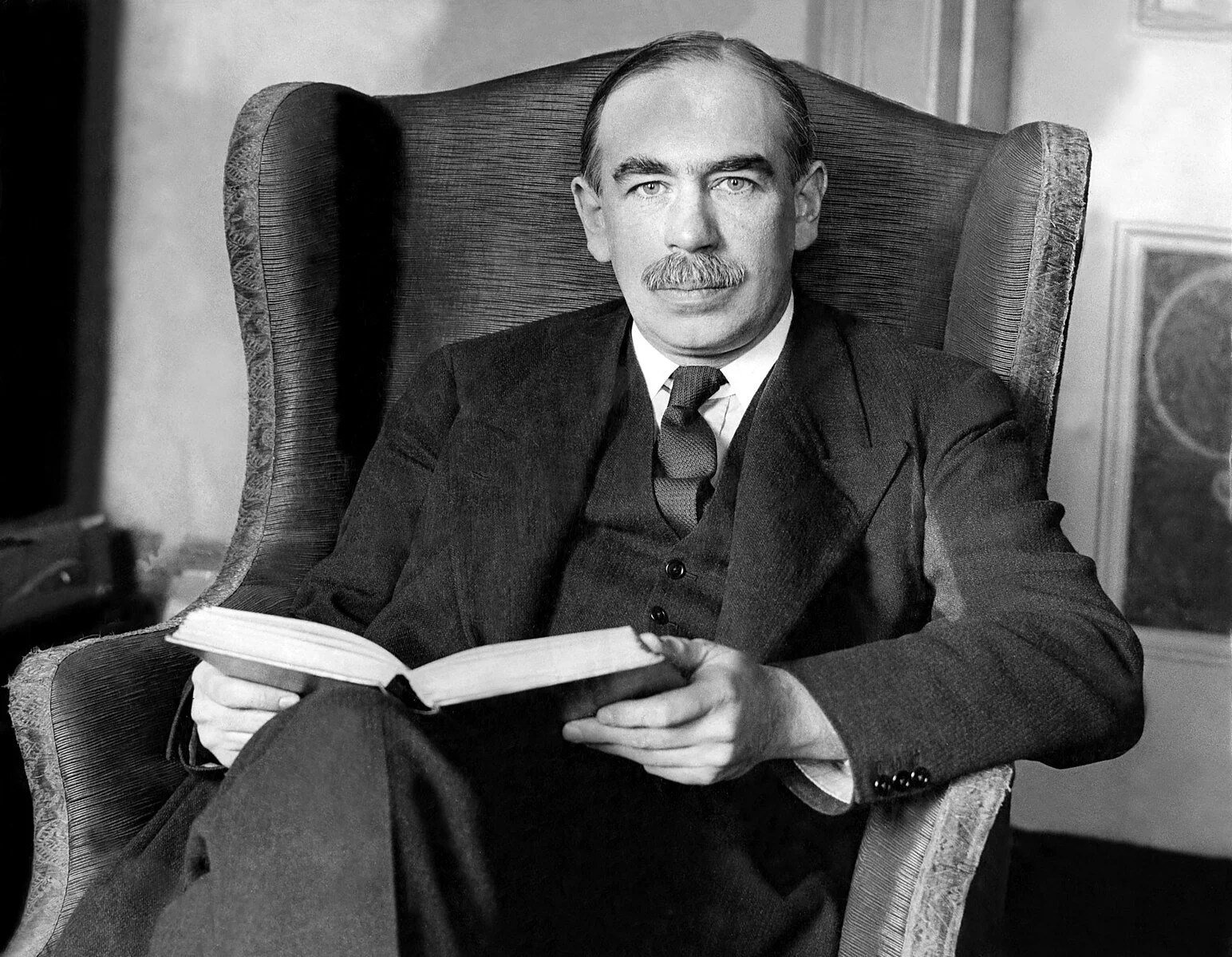
The theory of income and employment (which was created by John Maynard Keynes in the 1930's) is arguably the most influential concept in modern economics. The theory is used to explain the overall level of income and employment within an economy based on the relationship between Aggregate Demand and Aggregate Supply.
In general, according to Keynes, unemployment occurs in an economy when there is a lack of aggregate demand for the total amount of goods and services being produced in the economy. If people and businesses are not spending money then less will be produced and many will lose their jobs. Therefore, the level of employment in an economy is directly related to the amount of aggregate demand.
There are four main components of aggregate demand: consumption, investment, government spending and net exports. Investment is a key component, as it is based on business expectations and interest rates. Keynes believed that in periods of uncertainty private investment would fall which would lower demand and cause higher unemployment.
Therefore, Keynes believed that some form of government intervention was needed to stimulate demand and restore full employment. This could be done through increasing public spending, decreasing taxes, or decreasing interest rates. These ideas have been the foundation of monetary and fiscal policy.
The theory of income and employment also includes the explanation of the multiplier effect. This happens when an increase in investment causes a chain reaction in spending and income, resulting in an increase in national income and employment. An example of the multiplier effect would be if the government were to invest in road construction. Construction workers would be earning wages, they would use those wages to buy goods and create further demand in the economy.
Although the Keynesian theory of income and employment has been highly relevant since its development, some argue that its use today is limited. Many countries now implement stimulus packages to increase demand and employment during slow-downs in the economy. However, critics believe that too much government spending could result in inflation and larger budget deficits.
In conclusion, the theory of income and employment illustrates the importance of aggregate demand in influencing economic activity. The theory has moved the focus of economics from long term self correction to short term government intervention and therefore forms the base of modern macroeconomics.
Article written by Pragya Siotia | Proofread by Zhangir Zhangaskin
