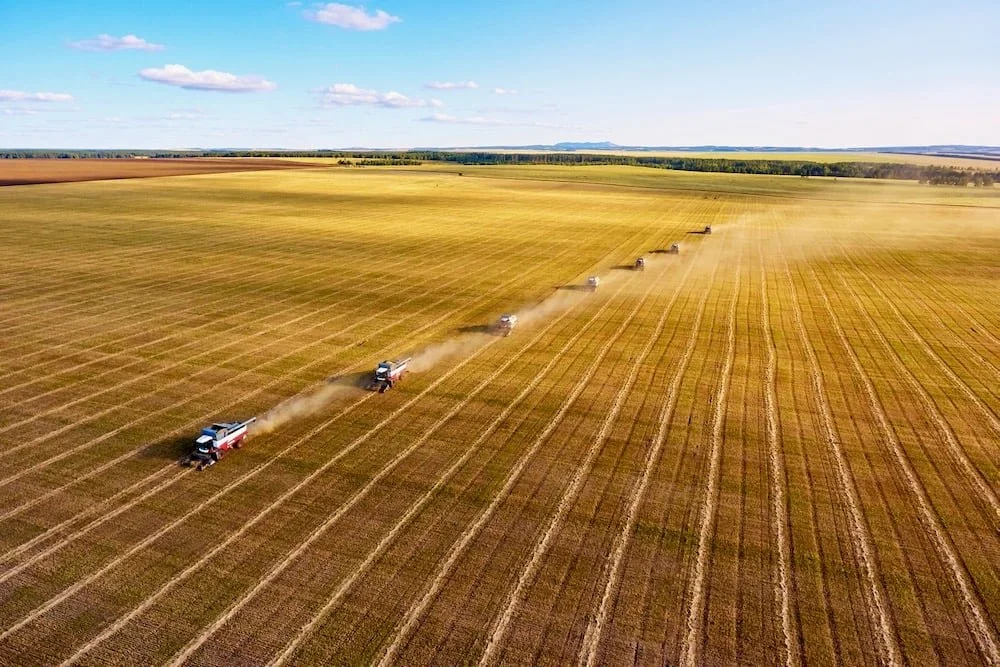
Since the beginning, agriculture has been not only for providing the resources essential for sustaining life but also enhancing a nation's economy. Any country's economic structure consist of sectors, with agriculture playing a role being in the primary sector. It's crucial for generating a chunk of money.
With research done in 2021, we have found out that 5.1 % of Kazakhstan's economic production was due to agriculture. This figure, however, does not fully capture its profound social impact. Nearly 45% of the country's population lives in rural areas, with incomes for almost 30% of the economically active population generated by agricultural employment. This indicates agriculture's direct influence in the lives of Kazakhstani citizens.
Kazakhstan is Central Asia's leading producer of wheat and barley. This dominance is best understood through key economic theories.
The Hecksher-Ohlin Theory, clearly expresses why Kazakhstan focuses on these particular products. The country possesses a vast amount of land, a key factor of production for large-scale farming. This allows Kazakhstan to produce these goods at a lower cost than many other nations.
This specialization is backed by the theory of comparative advantage, as well. This principle suggests that an economy shall focus on producing and exporting goods where its opportunity cost is lowest. For Kazakhstan, the opportunity cost of producing massive quantities of grains is less than producing other, more complex goods. By specializing in agriculture, Kazakhstan can maximize its productive efficiency and trade its agricultural surplus for goods it cannot produce as efficiently, like high-tech machinery. This way, agricultural specialization and trade ultimately boosts the nation's overall economic state.
International trade and exports are critical for realizing the full potential of Kazakhstan's agricultural sector. Exporting agricultural products earns foreign currency, which can then be reinvested into the sector itself. This investment is vital for modernizing farming techniques, improving essential infrastructure like irrigation systems and transport networks, and enhancing logistical capabilities. This cycle of investment, in turn, boosts agricultural productivity and competitiveness.
Article written by Adiya Yessen | Proofread by Zhangir Zhangaskin
